Say it in real-life moments (mealtimes, bath, getting dressed, play). Point to what’s happening, then use the word in a short sentence. Repeat it often and ask your child to repeat it too.
Words appearing in Word of the Week have been chosen to support the DfE (Department for Education) emphasis on skills and vocabulary required for children from birth to age 5. These skills and goals are set out in the Early Years Foundation Stage Framework (EYFS), which is designed for early childhood learning.
Say it in real-life moments (mealtimes, bath, getting dressed, play). Point to what’s happening, then use the word in a short sentence. Repeat it often and ask your child to repeat it too.
Words appearing in Word of the Week have been chosen to support the DfE (Department for Education) emphasis on skills and vocabulary required for children from birth to age 5. These skills and goals are set out in the Early Years Foundation Stage Framework (EYFS), which is designed for early childhood learning.
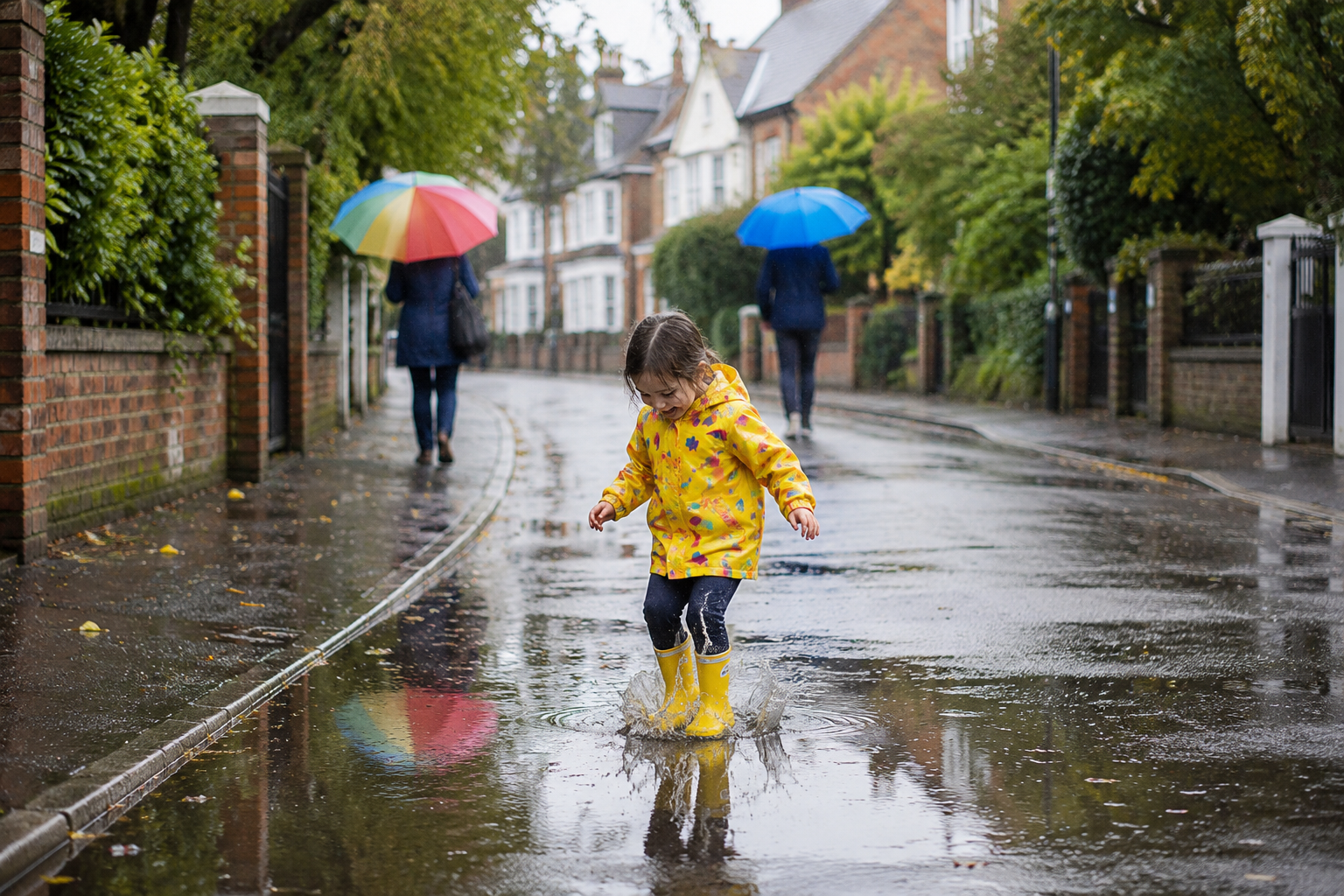
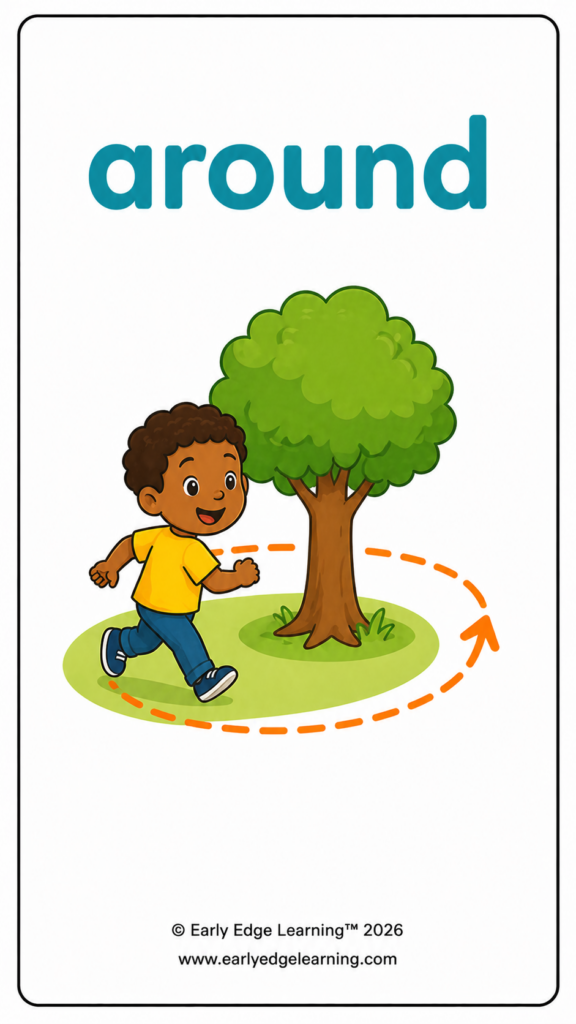
Meaning: All the way to the other side of something.
Example: “Please sit around the rug.”
Say it in real-life moments (mealtimes, bath, getting dressed, play). Point to what’s happening, then use the word in a short sentence. Repeat it often and ask your child to repeat it too.
Can you use the word ‘around’ to describe what is happening?
Words appearing in Word of the Week have been chosen to support the DfE (Department for Education) emphasis on skills and vocabulary required for children from birth to age 5. These skills and goals are set out in the Early Years Foundation Stage Framework (EYFS), which is designed for early childhood learning.
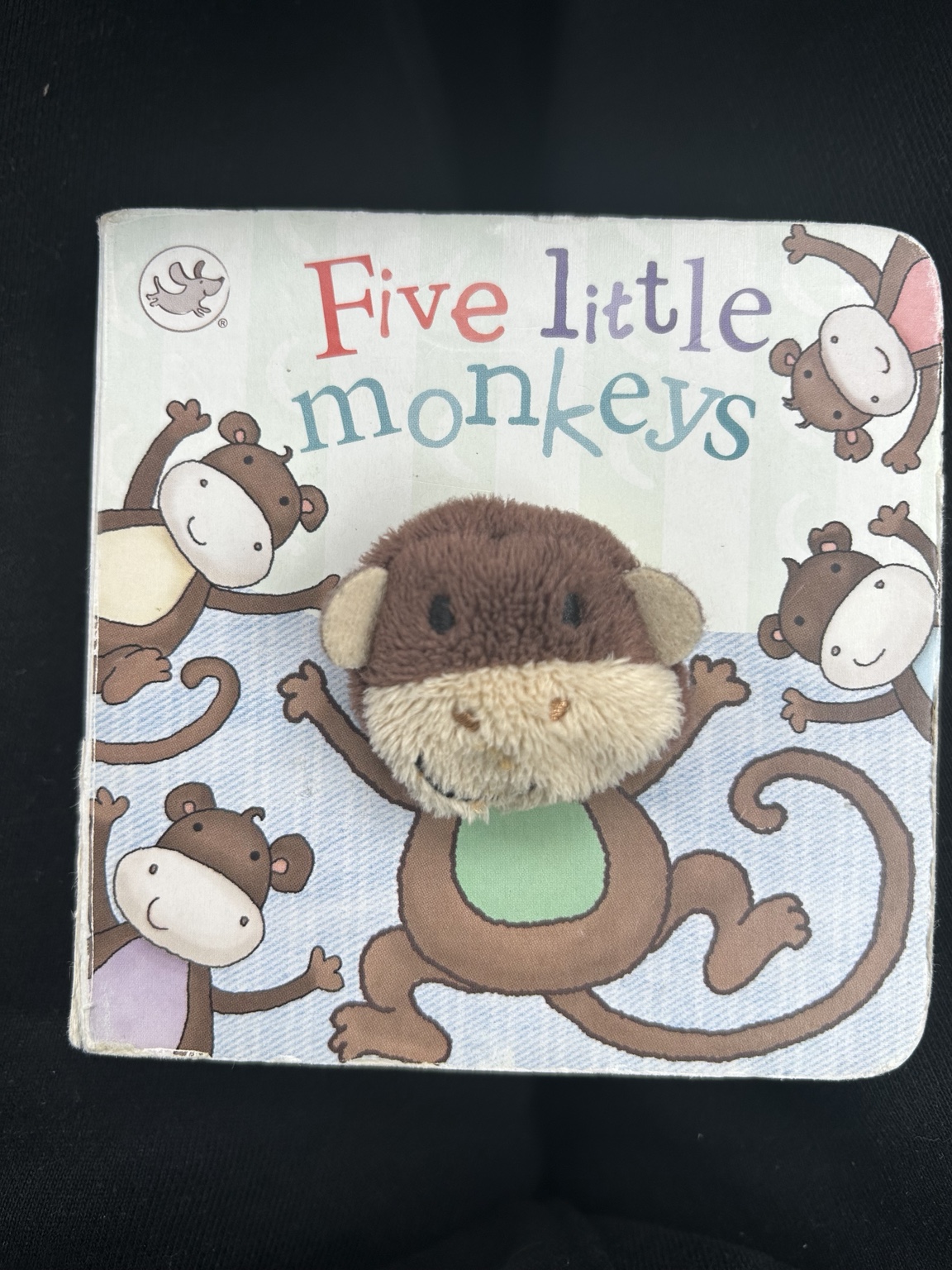
This Five Little Monkeys finger puppet book is a lovely example of a preschool-friendly book that combines counting, rhyme, repetition, and play. The soft puppet in the middle makes it especially engaging for young children, because it gives them something to look at, touch, and follow as you read together.
Why this book is good for numeracy
At first glance, this looks like a fun novelty book. But books like this are actually very useful for helping young children build early maths understanding.
With a story or rhyme based around five little monkeys, children begin to hear and notice:
counting in order
the idea that numbers relate to quantity
one less each time
repetition and pattern in number songs
early number language such as one, two, three, four, five
This matters because early numeracy is not just about recognising written numbers. It is also about hearing number words again and again, joining in, and beginning to understand what those words mean.
Why finger puppet books work so well
The puppet element helps hold a child’s attention and makes story time feel playful rather than formal.
You can use the puppet to:
count the monkeys together
point to monkeys on the page
encourage your child to join in with repeated lines
act out the rhyme
pause and ask, “How many monkeys are left?”
That little bit of movement can make a big difference, especially for younger preschoolers who are still learning to sit, watch, listen, and join in.
Great for school readiness
Books like this support more than just counting.
They also help children practise:
listening and attention
turn-taking
joining in with familiar words
noticing pattern and sequence
building confidence with early number language
These are all useful foundations for Reception, where children are expected to listen to stories, join in with rhymes, and begin exploring number in practical ways.
A good reminder: learning does not have to be expensive
One of the best things about little books like this is that they do not need to cost much.
This is exactly the sort of item parents can often pick up at boot fairs for about 20p, which makes it a brilliant low-cost find for home learning. Sometimes the best resources are not the newest or most expensive ones. They are the simple, well-loved books that children want to read again and again.
Easy ways to use this book at home
You do not need to “teach” with it. Just keep it playful.
Try:
counting the monkeys on each page
holding up fingers as you read
asking, “How many now?”
saying the number words slowly together
using the puppet to “jump” as you tell the rhyme
Even two minutes of this kind of shared reading can help build familiarity with number language.
This post contains affiliate links. As an Amazon Associate, I earn from qualifying purchases:https://amzn.to/48T64nh