
Picture of the Week

Pictures to stimulate conversation and vocabulary.

Picture of the Week, Weekly Updates

Week 42 – Picture of the Week

Grown-Up Guide: Let’s Talk!

Words you may find useful:

What to do

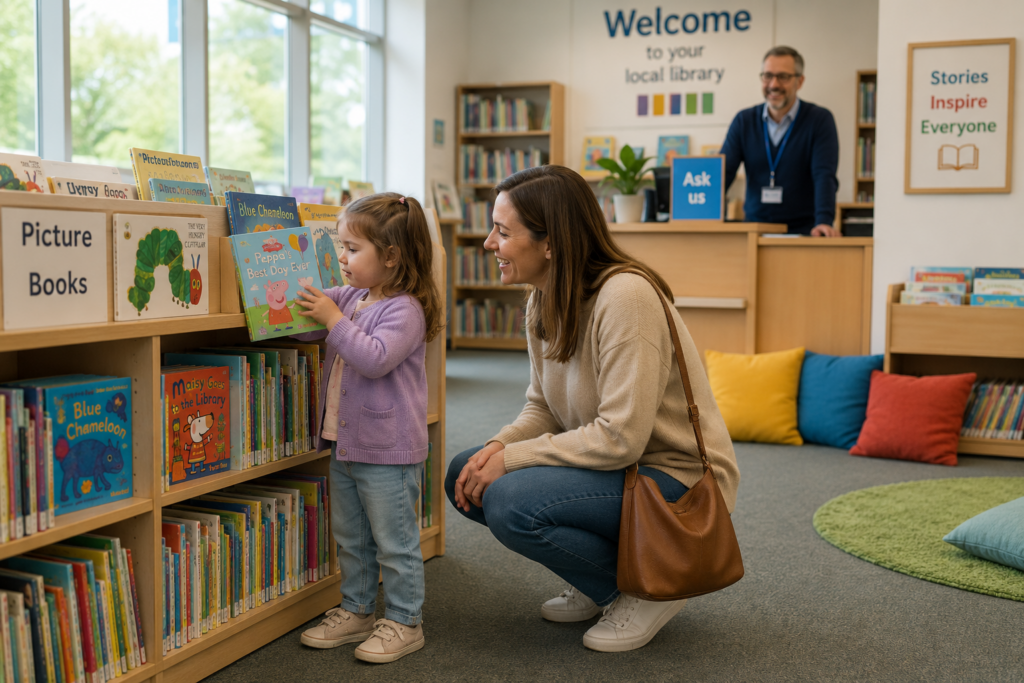
This picture helps develop your child’s Literacy by encouraging a love of books and helping them understand that stories have meaning and can be enjoyed together. It also supports Communication and Language as children talk about pictures, predict what might happen in a story and learn new vocabulary.

Sit together and look at the picture. Let your child lead—follow what they notice first.

You say it first (Copy + Add)

“I can see a library.”

“The child is choosing a book.”

“There are lots of stories to read.”

👉 Then, depending on the age of your child, add one or more words:

“A colourful picture book.”

“A friendly librarian.”

“A tall bookshelf.”

💬 3 questions to build language

  • “Which book do you think the child will choose?”
  • “What do you think the story might be about?”
  • “If you could borrow one book today, which would you pick?”

If no answer

That’s okay—keep modelling:

“There are lots of books.”

“The child is looking carefully.”

“I wonder which story they will take home.”

⏱️ 2-minute routine

📚 Visit your local library and let your child choose one book that interests them.
👀 Look at the front cover together and guess what the story might be about before opening it.
💬 Talk about the pictures as you read, even if you don’t finish the whole book.
❤️ Return regularly so your child learns that books are exciting to discover and share.

Keep it short, warm and pressure-free.
Picture of the Week, Weekly Updates

Week 41 – Picture of the Week

Grown-Up Guide: Let’s Talk!

Words you may find useful:

What to do

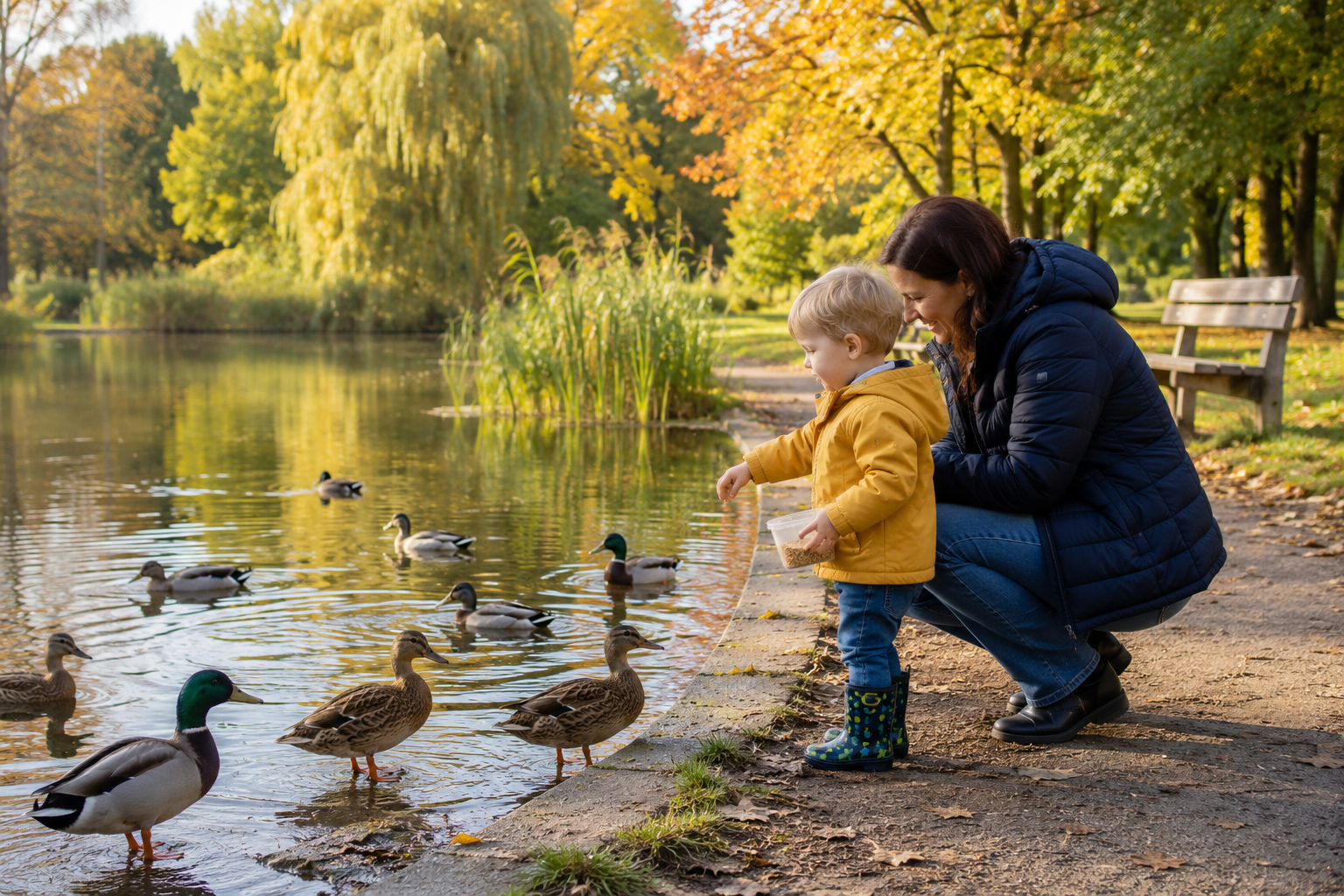
This picture helps develop your child’s Understanding the World by encouraging them to learn about wildlife, habitats and how to care for animals responsibly. It also supports Communication and Language as children describe what they see, ask questions and learn new words about the natural world.

Sit together and look at the picture. Let your child lead—follow what they notice first.

You say it first (Copy + Add)

“I can see some ducks swimming.”

“The child is feeding the ducks.”

“The ducks are paddling across the pond.”

👉 Then, depending on the age of your child, add one or more words:

“A fluffy brown duckling.”

“Smooth white feathers.”

“A calm, peaceful pond.”

💬 3 questions to build language

  • “What animals can you see?”
  • “Why do you think we need to be gentle with wildlife?”
  • “Where do you think the ducks sleep?”

If no answer

That’s okay—keep modelling:

“The ducks are swimming.”

“They have feathers.”

“The child is being kind to the ducks.”

⏱️ 2-minute routine

🦆 Visit a local pond or lake if you can.
👀 Watch the ducks quietly and count how many you can see.
💬 Talk about what the ducks are doing using words like swimming, paddling and floating.
🌾 Remember to feed them suitable food, such as oats or duck pellets, and explain why bread isn’t the healthiest choice for ducks.

Keep it short, warm and pressure-free.
Picture of the Week, Weekly Updates

Week 40 – Picture of the Week

Grown-Up Guide: Let’s Talk!

Words you may find useful:

What to do

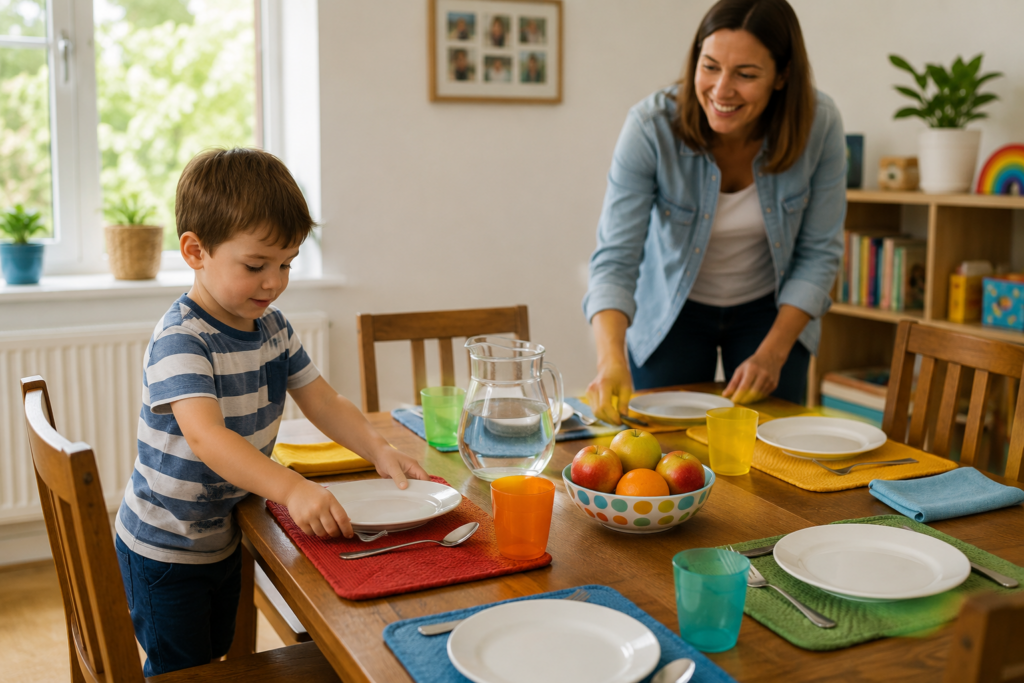
This picture helps develop your child’s Mathematics by encouraging them to count, match and organise items ready for a meal. It also supports Personal, Social and Emotional Development as children learn to help at home, follow simple routines and become more independent.

Sit together and look at the picture. Let your child lead—follow what they notice first.

You say it first (Copy + Add)

“I can see the child setting the table.”

“There is one plate for each person.”

“The forks and spoons are ready.”

👉 Then, depending on the age of your child, add one or more words:

“A clean white plate.”

“A shiny silver fork.”

“A folded blue napkin.”

💬 3 questions to build language

“What can you see on the table?”

“How many plates do we need?”

“How can the child help before dinner?”

If no answer

That’s okay—keep modelling:

“The plate goes here.”

“Each person needs a fork.”

“The child is helping to set the table.”

⏱️ 2-minute routine

🍽️ Ask your child to help set the table for your next meal.
🔢 Count how many people are eating and place one plate, cup and spoon for each person.
💬 Talk about where each item belongs using words like next to, on, under and between.
👏 Thank your child for being a helpful member of the family.

Keep it short, warm and pressure-free.
Picture of the Week, Weekly Updates

Week 39 – Picture of the Week

Grown-Up Guide: Let’s Talk!

Words you may find useful:

What to do

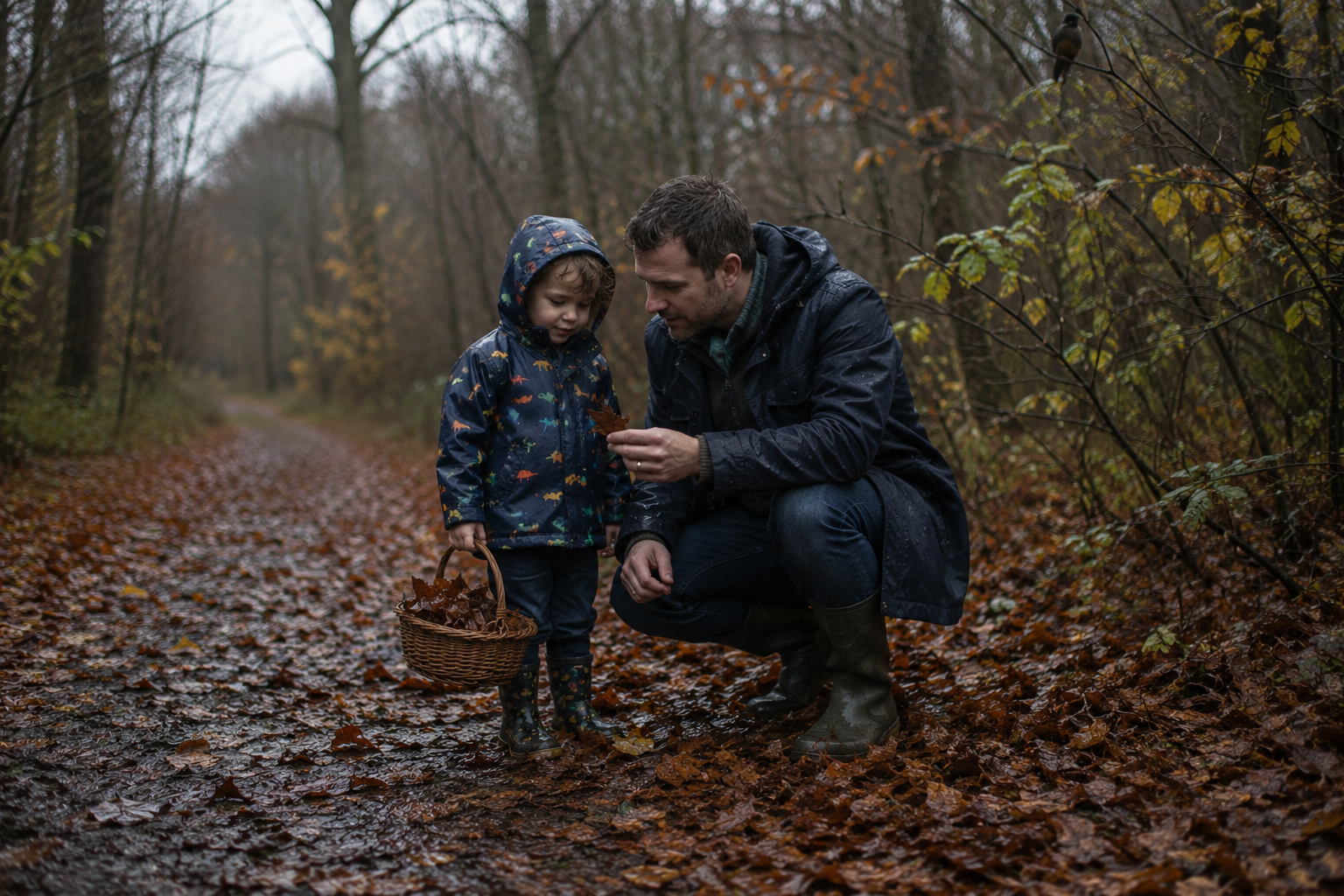
This picture helps develop your child’s Understanding the World by encouraging them to notice how the seasons change and explore the natural environment. It also supports Communication and Language as children describe what they see, compare colours and share their observations.

Sit together and look at the picture. Let your child lead—follow what they notice first.

You say it first (Copy + Add)

“I can see lots of colourful leaves.”

“The child is collecting leaves.”

“The leaves have fallen from the trees.”

👉 Then, depending on the age of your child, add one or more words:

“A crunchy brown leaf.”

“A bright golden tree.”

“A smooth red leaf.”

💬 3 questions to build language

“What colours can you see?”

“How do you think the leaves feel?”

“What do you think happens to the trees when autumn ends?”

If no answer

That’s okay—keep modelling:

“The leaves are red and yellow.”

“This leaf feels crunchy.”

“The child is collecting leaves in a basket.”

⏱️ 2-minute routine

🍂 Collect a few fallen leaves on your next walk together.
🟡 Sort them by colour, size or shape.
👋 Feel each leaf and talk about whether it is smooth, rough, dry or crunchy.
🎨 Create a simple leaf picture or leaf rubbing when you get home.

Keep it short, warm and pressure-free.
Picture of the Week, Weekly Updates

Week 37 – Picture of the Week

Grown-Up Guide: Let’s Talk!

Words you may find useful:

What to do

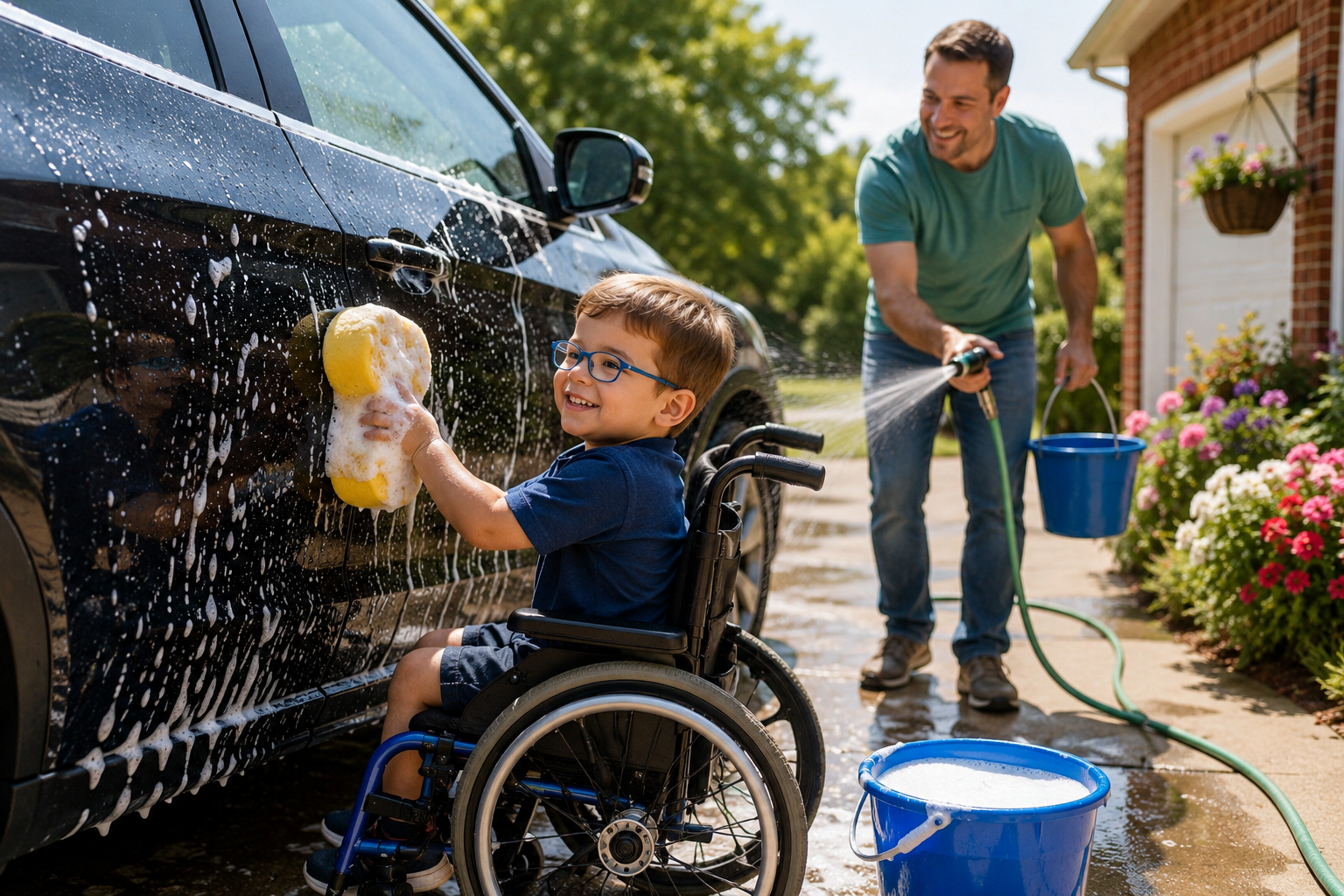
This picture helps develop your child’s Physical Development by encouraging them to use their hands and arms during everyday tasks like washing and scrubbing. It also supports Personal, Social and Emotional Development as children learn to help others, follow simple instructions and take pride in caring for their belongings.

Sit together and look at the picture. Let your child lead—follow what they notice first.

You say it first (Copy + Add)

“I can see a child washing the car.”

“They are using a sponge.”

“The car is becoming nice and clean.”

👉 Then, depending on the age of your child, add one or more words:

“A soft, soapy sponge.”

“A shiny clean car.”

“They are helping together.”

💬 3 questions to build language

“What can you see?”

“Why do you think we wash our cars?”

“How is the child helping the grown-up?”

If no answer

That’s okay—keep modelling:

“The child is washing the car.”

“They are using lots of bubbles.”

“The car looks clean and shiny.”

⏱️ 2-minute routine

🧽 Choose something safe to clean together, such as a toy car, outdoor table or watering can.
💦 Dip a sponge into water and gently wash it together.
💬 Talk about words like clean, dirty, wet and shiny as you work.
👏 Praise your child for helping and thank them for being a great helper.

Keep it short, warm and pressure-free.
Picture of the Week, Weekly Updates

Week 36 – Picture of the Week

Grown-Up Guide: Let’s Talk!

Words you may find useful:

What to do

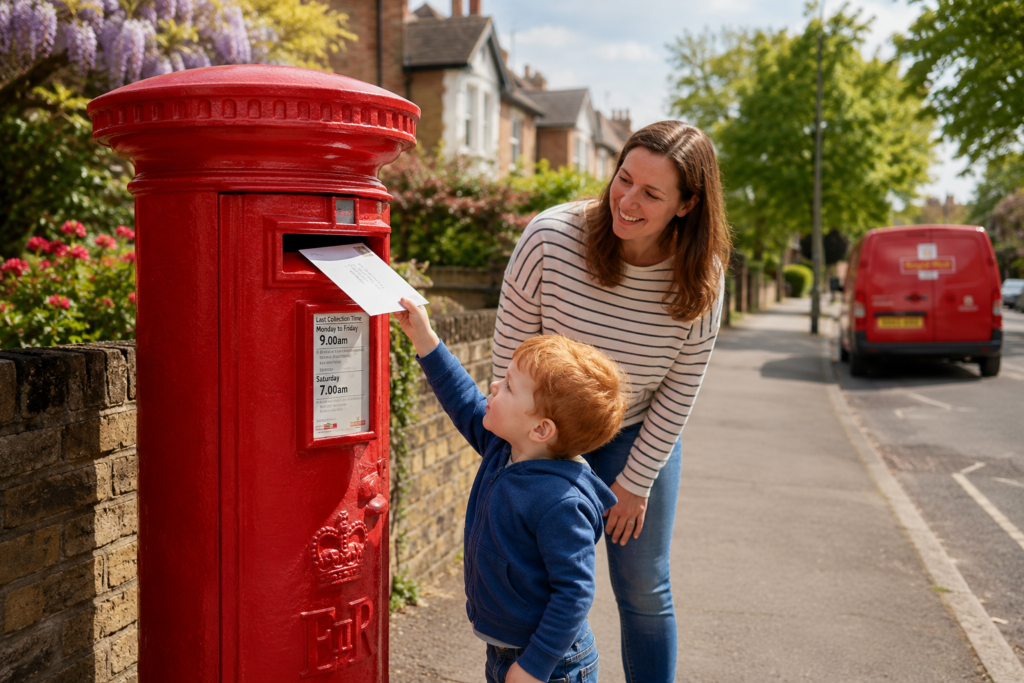
This picture helps develop your child’s Literacy by introducing early writing, letters and the purpose of print in everyday life. It also supports Understanding the World as children learn how the postal service helps people communicate and stay connected.

Sit together and look at the picture. Let your child lead—follow what they notice first.

You say it first (Copy + Add)

“I can see a red post box.”

“The child is posting a letter.”

“The letter will be delivered to someone.”

👉 Then, depending on the age of your child, add one or more words:

“A bright red post box.”

“A stamped envelope.”

“A helpful postman delivering letters.”

💬 3 questions to build language

“What can you see?”

“Who do you think the letter is for?”

“Where do you think the letter will go next?”

If no answer

That’s okay—keep modelling:

“This is a post box.”

“The child is posting a letter.”

“The postman will collect it and deliver it.”

⏱️ 2-minute routine

✉️ Write a simple picture or message together for a family member or friend.
📮 Put it in an envelope and talk about who will receive it.
🚶 Walk to your nearest post box and post it together.
💬 Chat about the journey the letter will make before it arrives.

Keep it short, warm and pressure-free.

Subscribe for FREE Weekly Word + Picture

Close Welcome Bar
Scroll to Top