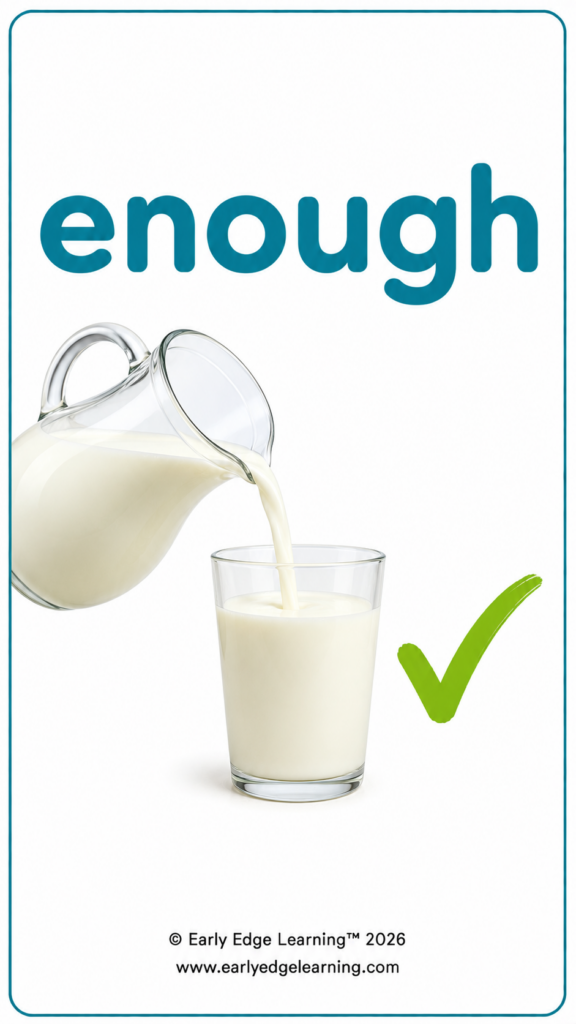
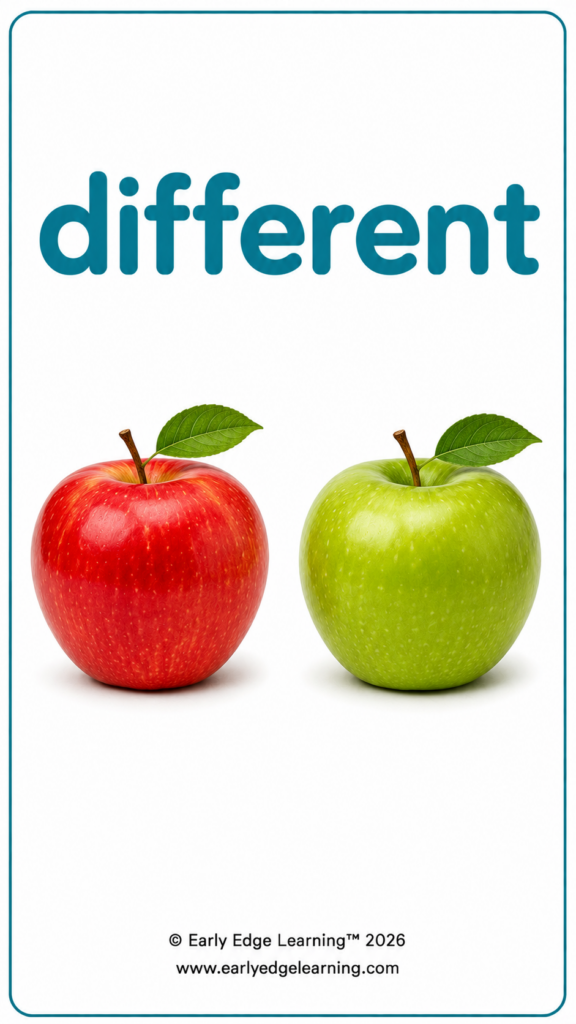
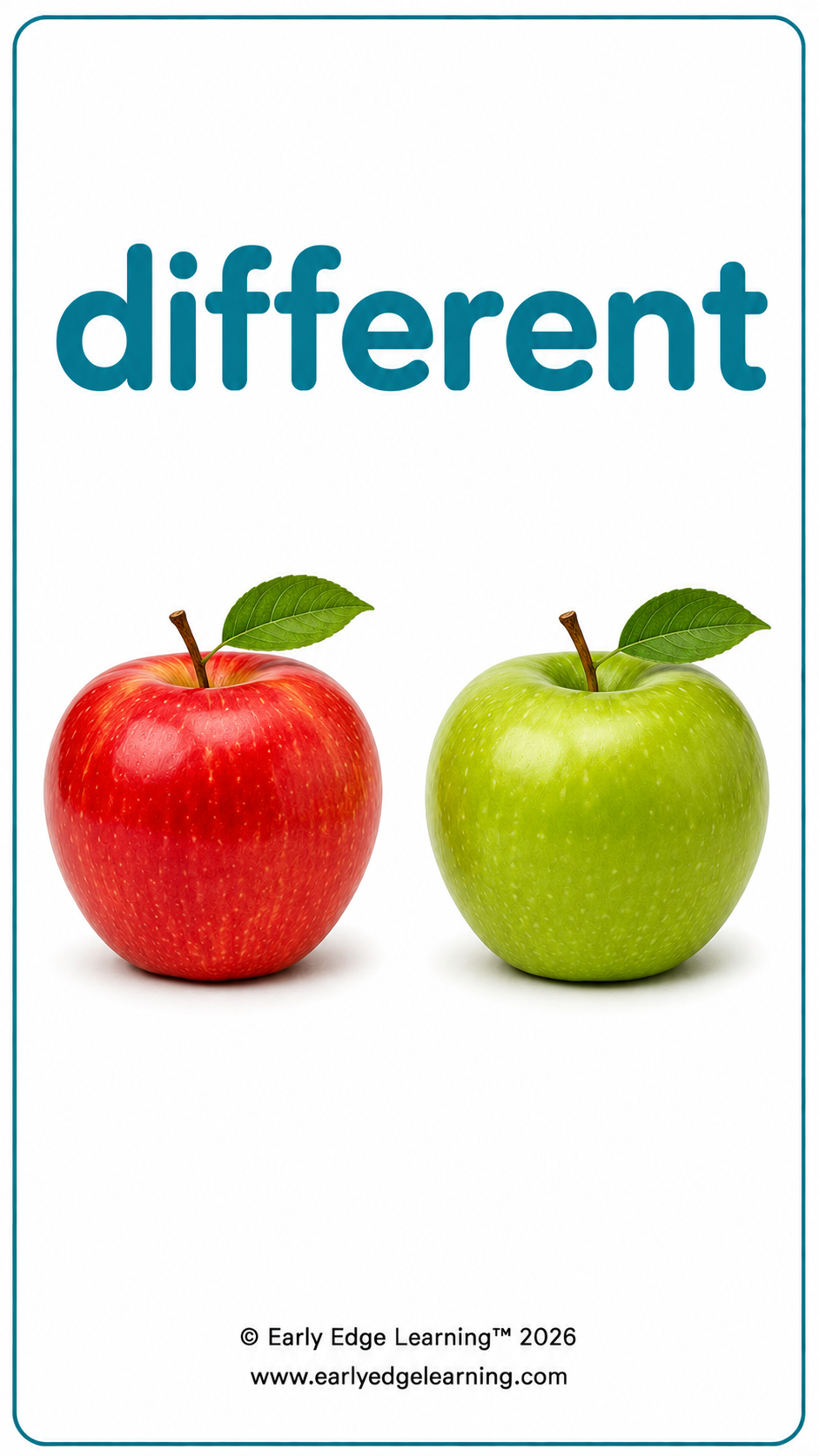
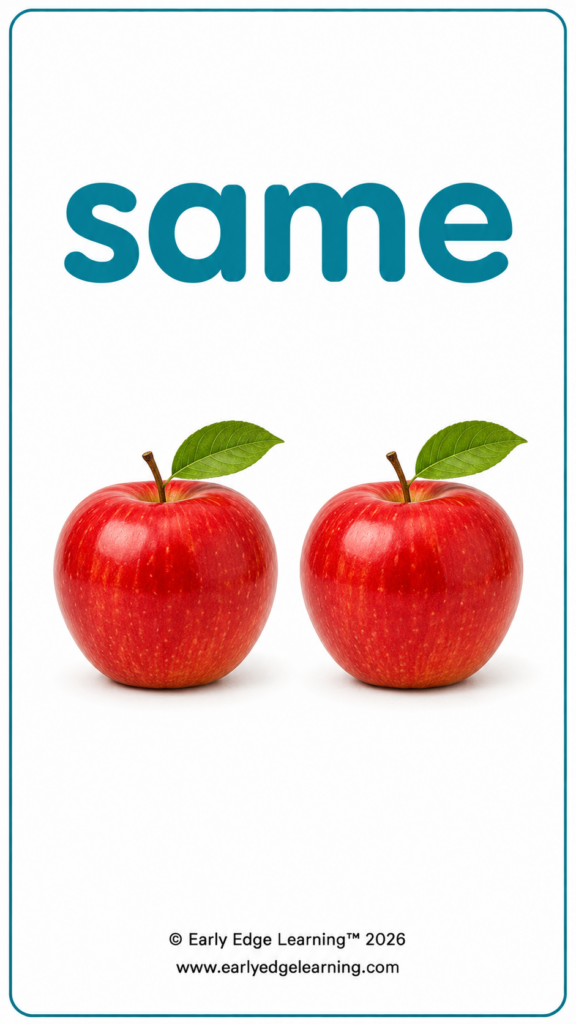
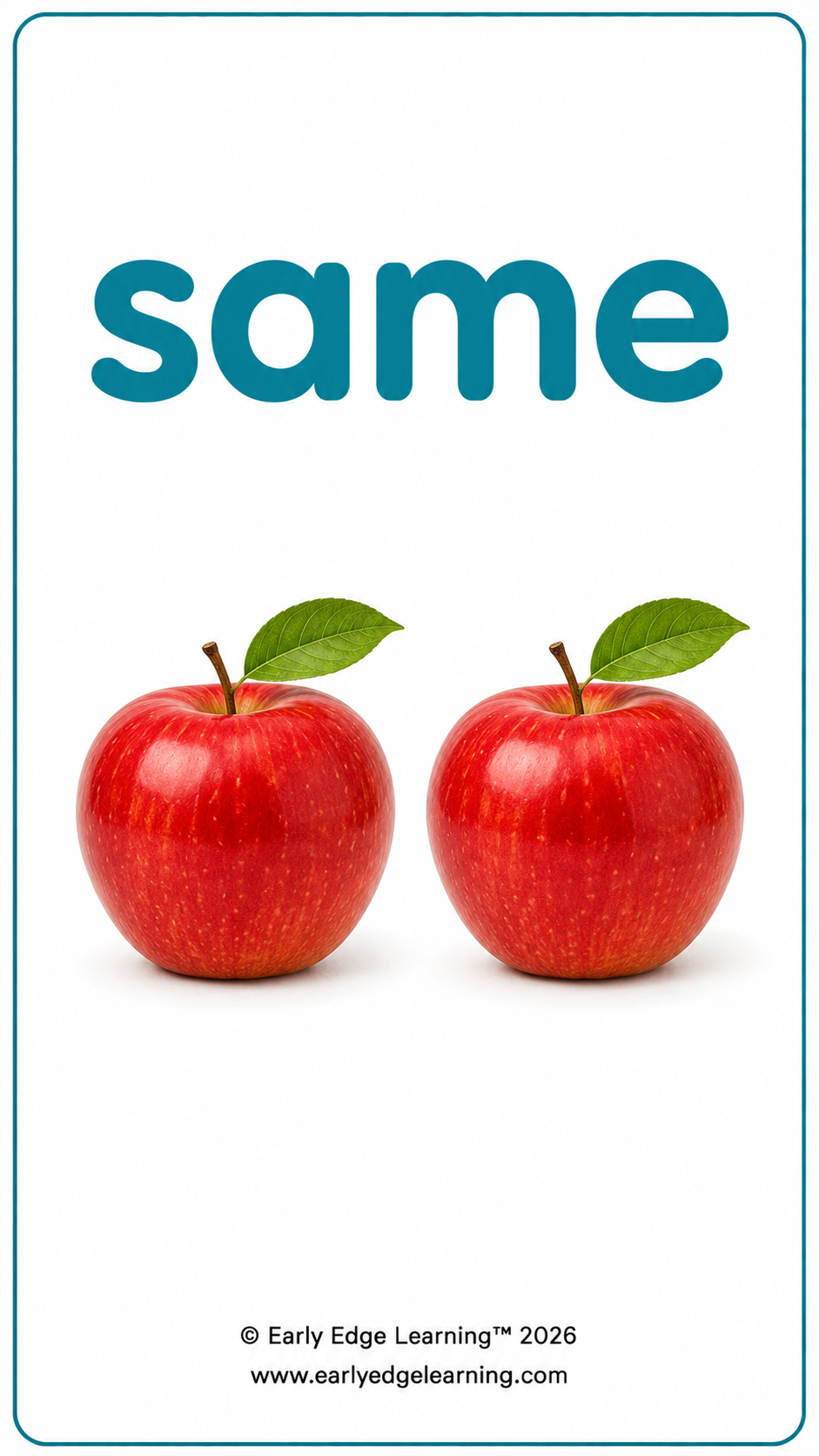
Say it in real-life moments (mealtimes, bath, getting dressed, play). Point to what’s happening, then use the word in a short sentence. Repeat it often and ask your child to repeat it too.
Words appearing in Word of the Week have been chosen to support the DfE (Department for Education) emphasis on skills and vocabulary required for children from birth to age 5. These skills and goals are set out in the Early Years Foundation Stage Framework (EYFS), which is designed for early childhood learning.
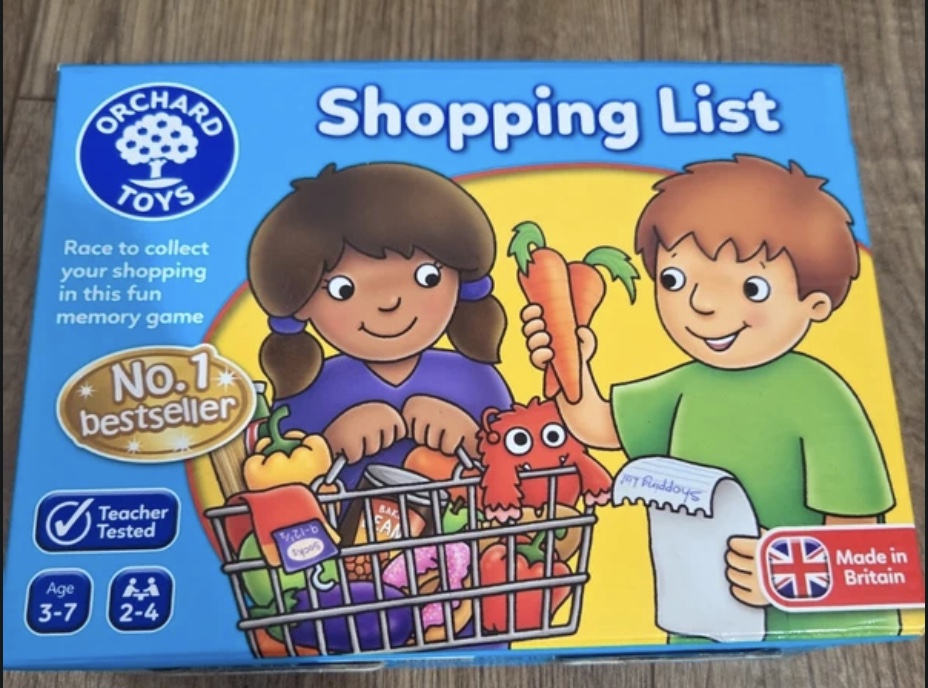
If you are looking for a simple game that builds attention, memory, and early learning skills, Shopping List is a lovely choice for preschoolers. Children take turns turning over cards and matching everyday food and household items to their board. It is easy to understand, requires no reading, and feels playful rather than formal.
This kind of game helps children practise listening, waiting, matching, taking turns, and remembering what they are looking for. It also supports vocabulary, because children see and talk about familiar shopping items they may already know from everyday life.
For children getting ready for Reception, this is useful because it builds the kind of focus and turn-taking they need in group activities and simple classroom games.
Where to buy – this game is often available for as little as £2 from some preloved platforms in the United Kingdom.
Disclosure: This post contains Amazon affiliate links. If you choose to buy through them, I may earn a small commission at no extra cost to you. As an Amazon Associate, I earn from qualifying purchases.
One note: there have been recalls affecting some Orchard Toys products in the past, but the recall notices I found were for other products or specific batches, not this Shopping List game.
Say it in real-life moments (mealtimes, bath, getting dressed, play). Point to what’s happening, then use the word in a short sentence. Repeat it often and ask your child to repeat it too.
Words appearing in Word of the Week have been chosen to support the DfE (Department for Education) emphasis on skills and vocabulary required for children from birth to age 5. These skills and goals are set out in the Early Years Foundation Stage Framework (EYFS), which is designed for early childhood learning.
Say it in real-life moments (mealtimes, bath, getting dressed, play). Point to what’s happening, then use the word in a short sentence. Repeat it often and ask your child to repeat it too.
Words appearing in Word of the Week have been chosen to support the DfE (Department for Education) emphasis on skills and vocabulary required for children from birth to age 5. These skills and goals are set out in the Early Years Foundation Stage Framework (EYFS), which is designed for early childhood learning.