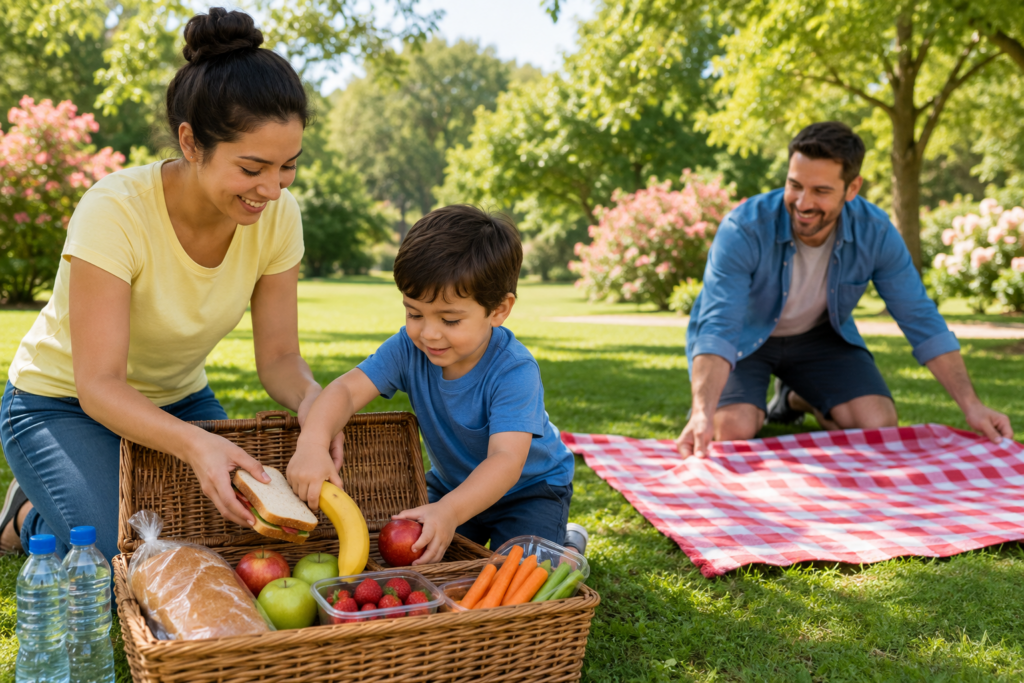
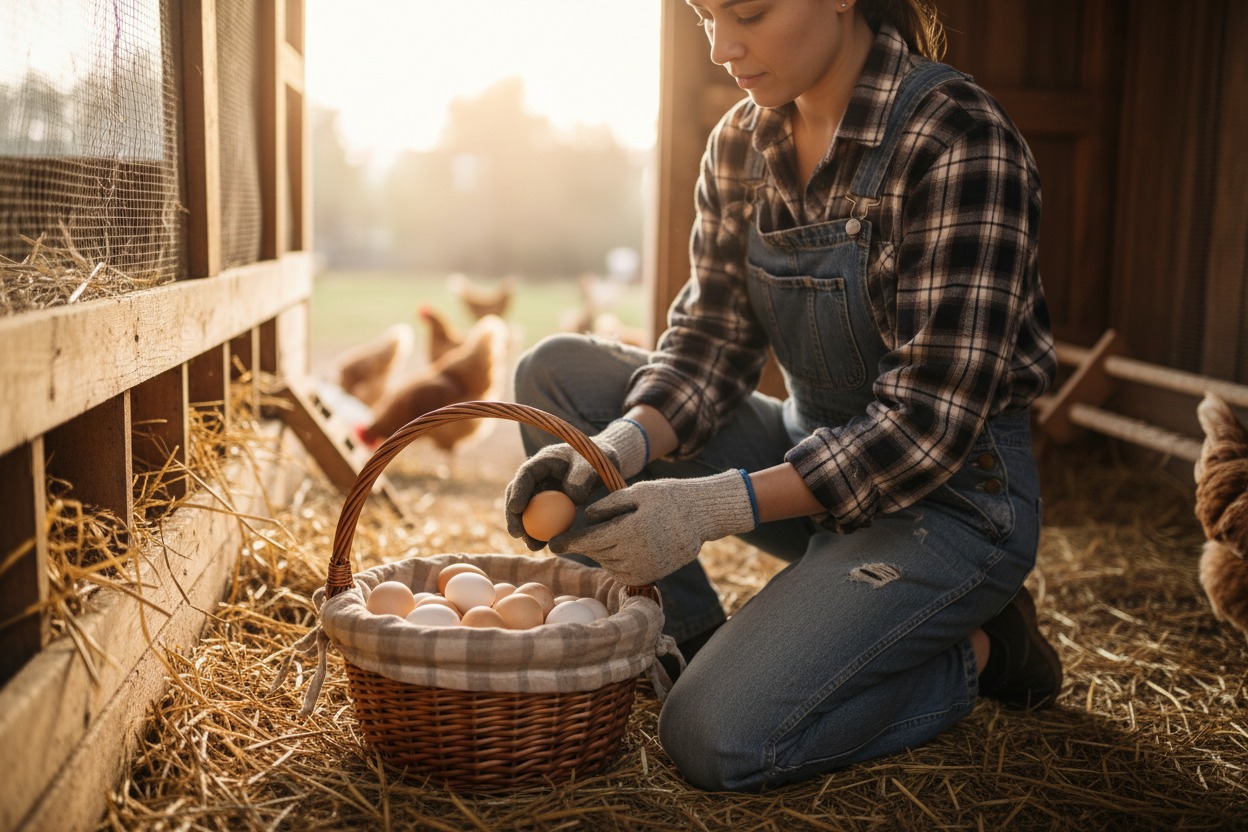
This picture helps develop your child’s Communication and Language by encouraging them to name foods, describe what they can see and use new vocabulary. It also supports Physical Development as children begin to understand healthy food choices and why eating a balanced diet helps keep our bodies strong.
Sit together and look at the picture. Let your child lead—follow what they notice first.
You say it first (Copy + Add)
“I can see a picnic.”
“They are putting food into the basket.”
“The fruit looks fresh and colourful.”
👉 Then, depending on the age of your child, add one or more words:
“A juicy red strawberry.”
“A healthy picnic lunch.”
“A soft picnic blanket.”
💬 3 questions to build language
“What foods can you see?”
“Which healthy food would you choose to eat first?”
“What would you pack for your own picnic?”
If no answer
That’s okay—keep modelling:
“I can see some fruit.”
“They are making a picnic.”
“The basket is full of healthy food.”
⏱️ 2-minute routine
🍎 Choose two healthy snacks from your kitchen. 🧺 Pack them into a lunchbox or small bag together. 💬 Talk about why each food is good for our bodies. 🌳 Enjoy your snack together in the garden, at the park or even on a blanket indoors.
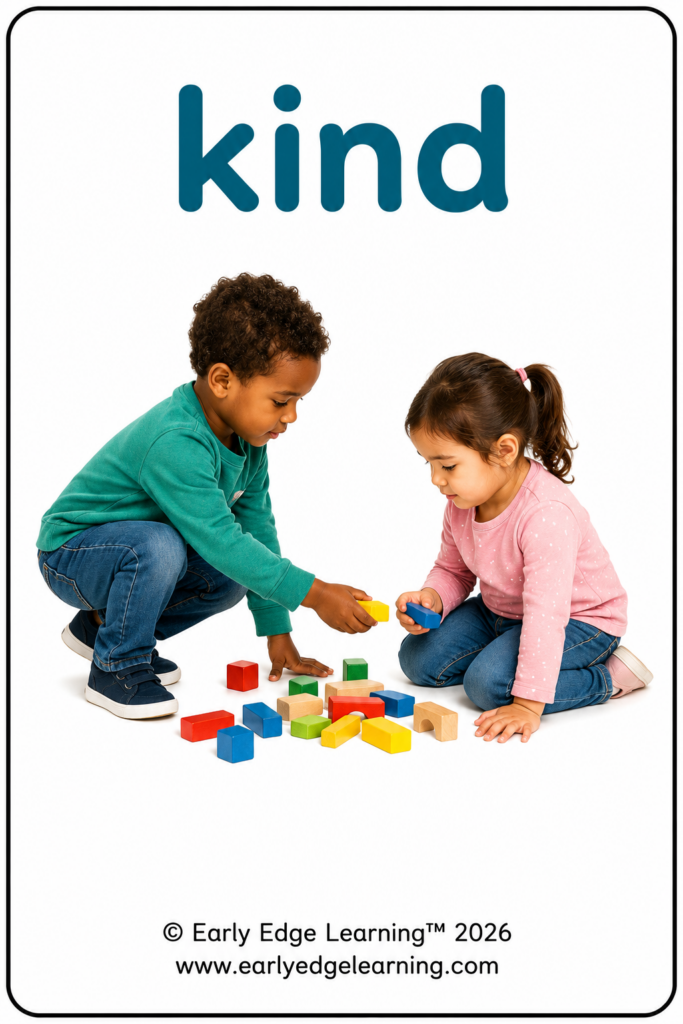
Meaning: Being friendly, helpful or caring towards other people.
Examples:
“You were kind when you shared your toys.”
“That was kind of you to help your friend.”
Say it in real-life moments (mealtimes, bath, getting dressed, play). Point to what’s happening, then use the word in a short sentence. Repeat it often and ask your child to repeat it too.
Words appearing in Word of the Week have been chosen to support the DfE (Department for Education) emphasis on skills and vocabulary required for children from birth to age 5. These skills and goals are set out in the Early Years Foundation Stage Framework (EYFS), which is designed for early childhood learning.
Words you may find useful:book story read bedtime page imagination
What to do
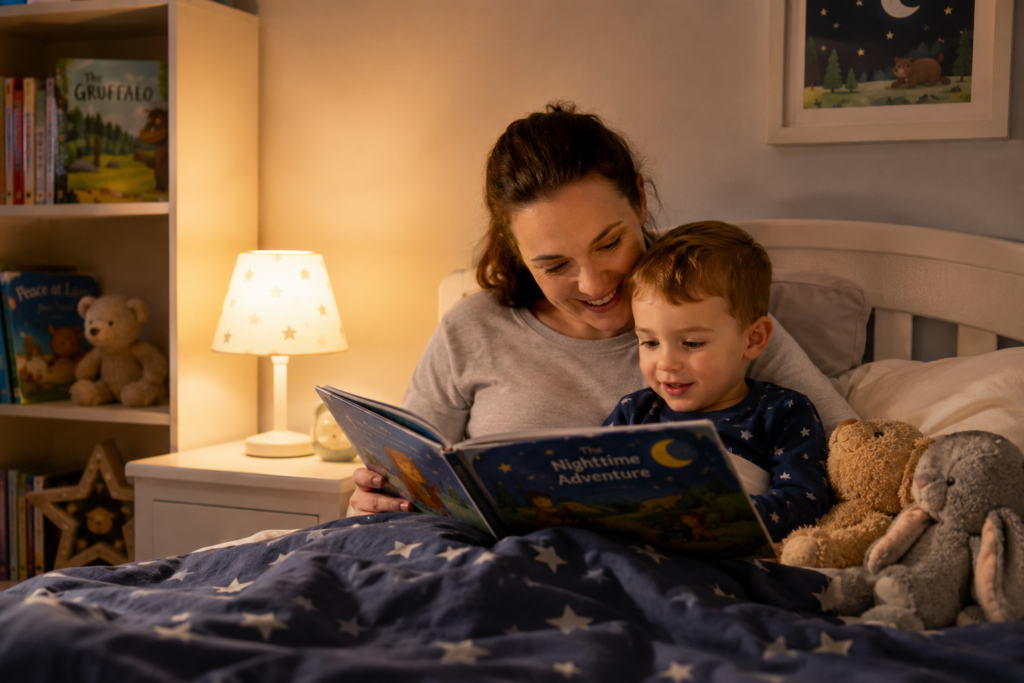
This picture helps develop your child’s Communication and Language by encouraging them to listen carefully, learn new words and talk about the story. It also supports Literacy as children begin to understand that books tell stories and reading can be enjoyable
Sit together and look at the picture. Let your child lead—follow what they notice first.
You say it first (Copy + Add)
“I can see a book.”
“The grown-up is reading a story.”
“The child is listening carefully.”
👉 Then, depending on the age of your child, add one or more words:
“A colourful picture book.”
“A cosy bedtime story.”
“A happy listening child.”
💬 3 questions to build language
“What can you see?”
“What do you think the story is about?”
“Which story do you like reading at bedtime?”
If no answer
That’s okay—keep modelling:
“They are reading together.”
“This is a storybook.”
“The child is listening.”
⏱️ 2-minute routine
📚 Choose a favourite picture book. 👀 Look at the front cover and guess what the story might be about. 💬 Read just one or two pages together and talk about the pictures. ❤️ Finish by asking your child to tell you their favourite part.
Three Types of Words That Help Prepare Children for School
As parents, we spend a lot of time teaching children the names of things—animals, colours, numbers and letters. But one of the most important types of vocabulary is often overlooked: words for what’s happening inside us.
These are known as internal state words. They help children describe their feelings, understand their bodies and talk about their thinking. By the time children start Reception, teachers use these words every day. Children who understand them are better able to communicate their needs, join in conversations and make sense of classroom life.
Here are three types of internal state words you can teach naturally through everyday conversations.
1. Feelings
Children need more than just happy and sad. Learning words such as frustrated, worried and proud helps them explain how they feel instead of expressing those feelings only through their behaviour.
The easiest way to teach these words isn’t by testing children. It’s by modelling them.
Instead of asking, “How do you feel?”, try saying:
“You look frustrated because the tower kept falling.”
Just as children learn colour names by hearing adults use them, they learn emotion words through repeated exposure in meaningful situations.
2. Body States
Young children also need words for what their bodies are telling them, such as hungry, thirsty, tired or hot.
Many preschoolers show these feelings through their behaviour before they can describe them. Giving them the right vocabulary helps them recognise what their body needs and communicate it more clearly.
One simple habit is to model your own body states:
“I’m thirsty after that walk.”
These everyday comments teach children that body sensations have names and that it’s normal to talk about them.
3. Thinking Words
Perhaps the most overlooked group of all are words that describe thinking, such as remember, think, notice and decide.
Reception teachers use these words constantly. They might ask children to remember an instruction, think about a problem or notice something in a story.
Parents can introduce the same vocabulary during everyday conversations.
Instead of asking, “What’s this?”, try:
“What do you think?”
Instead of saying, “Look!”, try:
“Did you notice…?”
These small changes encourage children to think about their own thinking while expanding the language they need for school.
Why It Matters
Children don’t need formal lessons to learn this vocabulary. They learn it through thousands of ordinary conversations with the adults around them.
Research consistently shows that rich adult–child conversations support children’s language development. More specifically, talking about feelings, bodily sensations and thinking helps children build the vocabulary they need to understand themselves, communicate with others and participate confidently in the classroom.
Preparing children for school isn’t only about teaching letters and numbers. It’s also about giving them the words to describe what’s happening inside them. Those everyday conversations become powerful building blocks for learning, relationships and self-understanding.
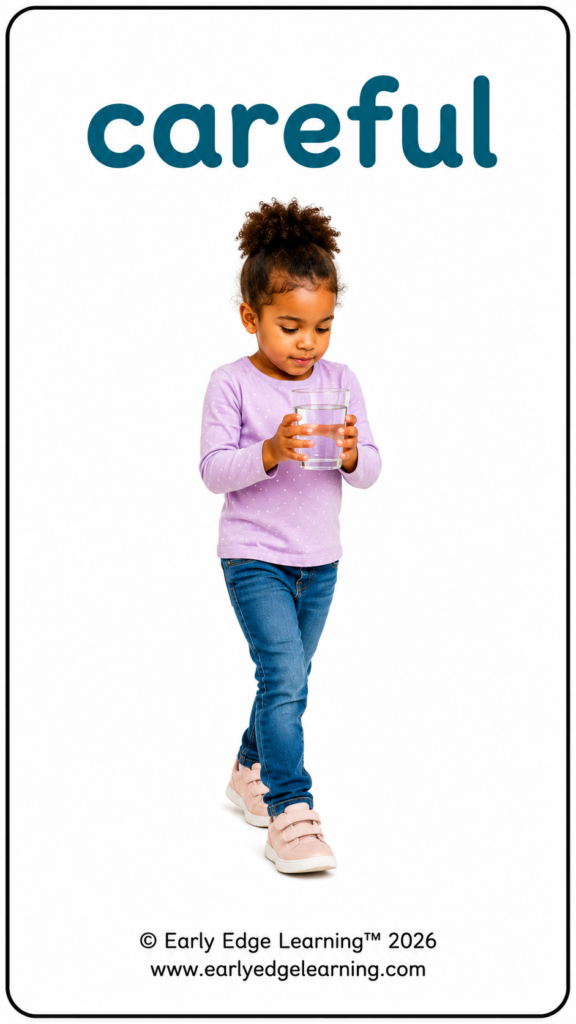
Meaning: Careful means taking your time to think about what you’re doing so you stay safe and do your best.
Example: “You are using those scissors carefully; well done!”
Say it in real-life moments (mealtimes, bath, getting dressed, play). Point to what’s happening, then use the word in a short sentence. Repeat it often and ask your child to repeat it too.
Words appearing in Word of the Week have been chosen to support the DfE (Department for Education) emphasis on skills and vocabulary required for children from birth to age 5. These skills and goals are set out in the Early Years Foundation Stage Framework (EYFS), which is designed for early childhood learning.
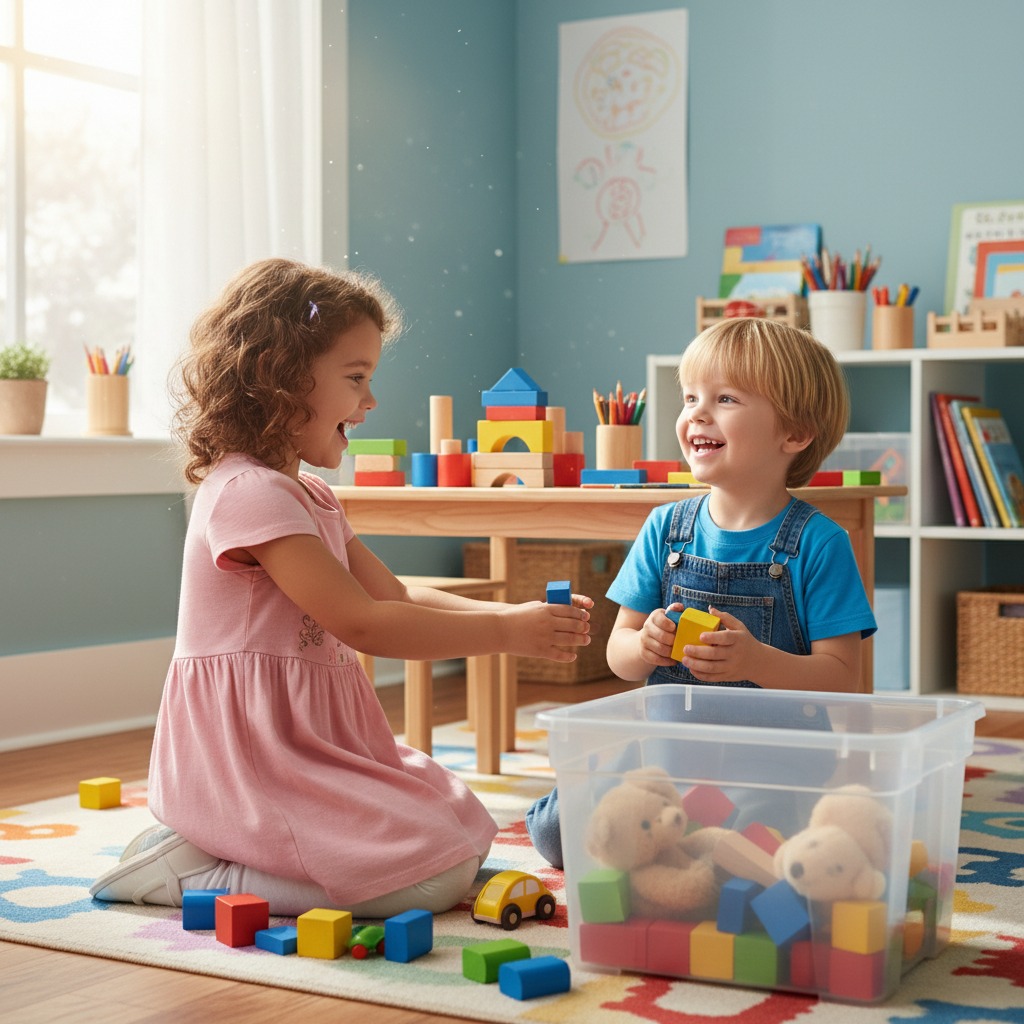
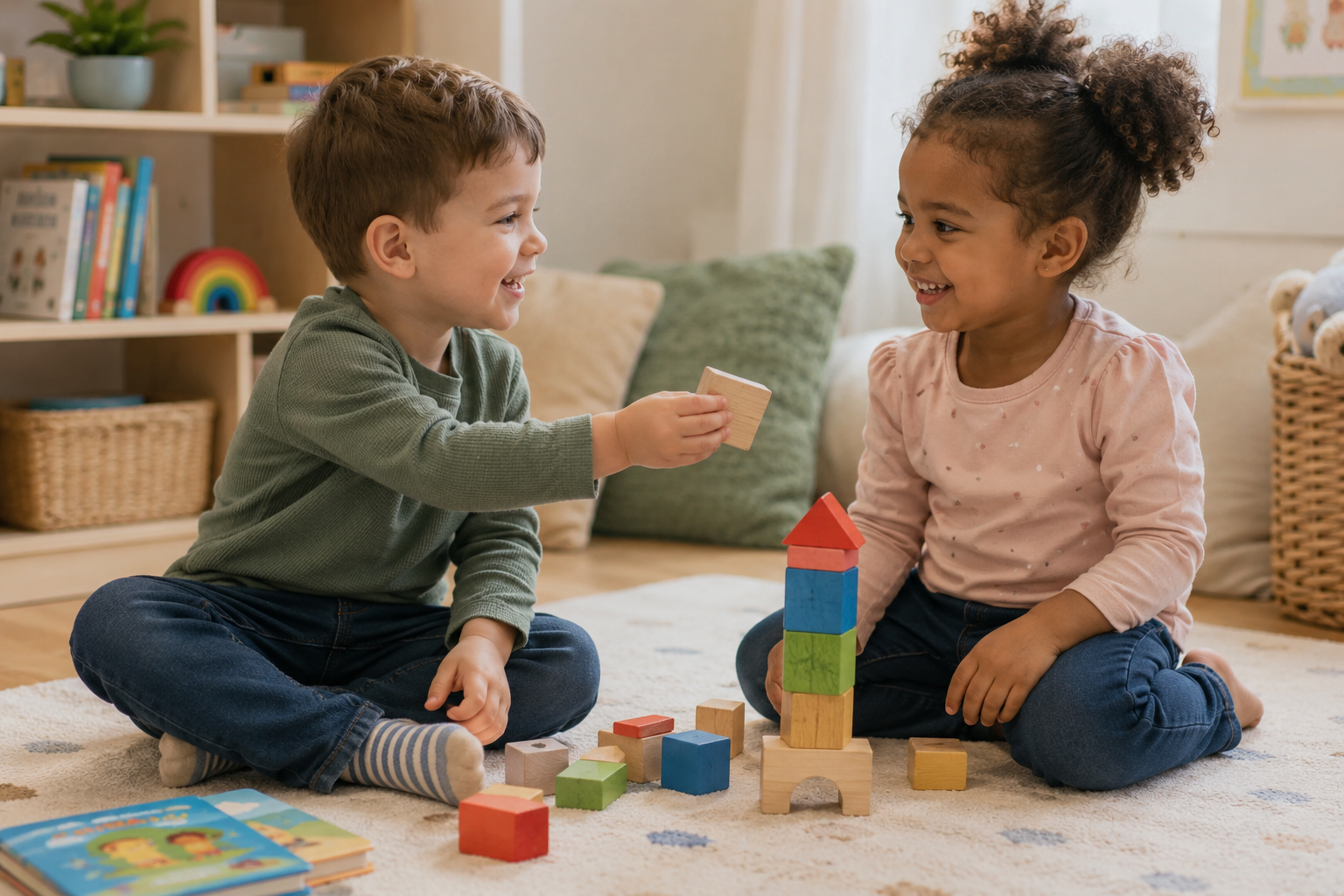
This picture helps develop your child’s Communication and Language by encouraging them to listen, talk and respond to others during play. It also supports Personal, Social and Emotional Development as children learn about sharing, taking turns and being a kind friend.
Sit together and look at the picture. Let your child lead—follow what they notice first.
You say it first (Copy + Add)
“I can see two children playing together.”
“They are sharing the toys.”
“They look like good friends.”
👉 Then, depending on the age of your child, add one or more words:
“Kind children sharing.”
“A tall block tower.”
“They are taking turns.”
💬 3 questions to build language
“What can you see?”
“What are the children doing together?”
“How can we be a kind friend when we play?”
If no answer
That’s okay—keep modelling:
“They are sharing.”
“They are building together.”
“The children are taking turns.”
⏱️ 2-minute routine
🧸 Look at two favourite toys. 🤝 Take turns choosing one toy each to play with. 💬 Say “Your turn” and “My turn” as you swap. 😊 Praise your child for sharing, waiting or using kind words.