Author name: admin

Weekly Updates, Word of the Week

Week 30 – Word of the Week – excited

Say it in real-life moments (mealtimes, bath, getting dressed, play). Point to what’s happening, then use the word in a short sentence. Repeat it often and ask your child to repeat it too.


Words appearing in Word of the Week have been chosen to support the DfE (Department for Education) emphasis on skills and vocabulary required for children from birth to age 5. These skills and goals are set out in the Early Years Foundation Stage Framework (EYFS), which is designed for early childhood learning.

Picture of the Week, Weekly Updates

Week 30 – Picture of the Week

Grown-Up Guide: Let’s Talk!

Words you may find useful:

What to do

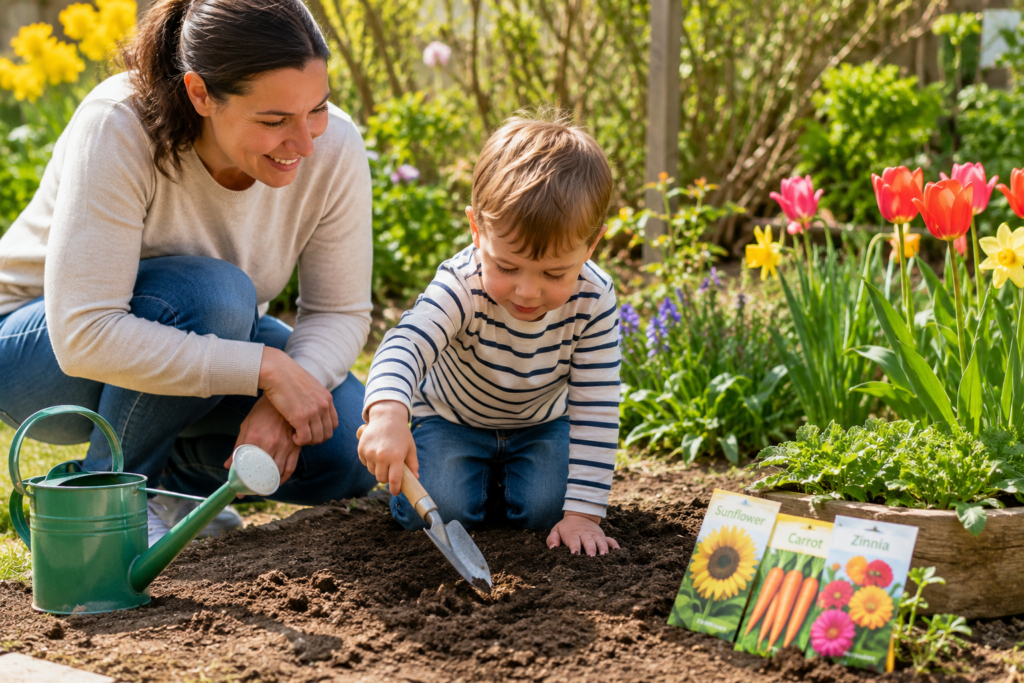
This picture helps develop your child’s Communication and Language by encouraging them to describe what they can see and explain what plants need to grow. It also supports Understanding the World as children learn about nature, growth and caring for living things.

Sit together and look at the picture. Let your child lead—follow what they notice first.

You say it first (Copy + Add)

“I can see a seed.”

“The child is planting it in the soil.”

“They are helping the plant to grow.”

👉 Then, depending on the age of your child, add one or more words:

“A tiny little seed.”

“Soft, dark soil.”

“A green growing plant.”

💬 3 questions to build language

“What can you see?”

“What do seeds need to grow?”

“What do you think will happen after we water the seed?”

If no answer

That’s okay — keep modelling:

“It is a seed.”

“The seed is in the soil.”

“The plant will grow.”

⏱️ 2-minute routine

⏱️ 2-minute routine

🌱 Look at the seed, soil and watering can.
🌱 Name one thing a plant needs to grow.
🌱 Talk about what might happen next.
🌱 Try planting a seed or watering a plant at home.

Picture of the Week, Weekly Updates

Week 29 – Picture of the Week

Grown-Up Guide: Let’s Talk!

Words you may find useful:

What to do

Sit together and look at the picture. Let your child lead — follow what they notice first.

You say it first (Copy + Add)

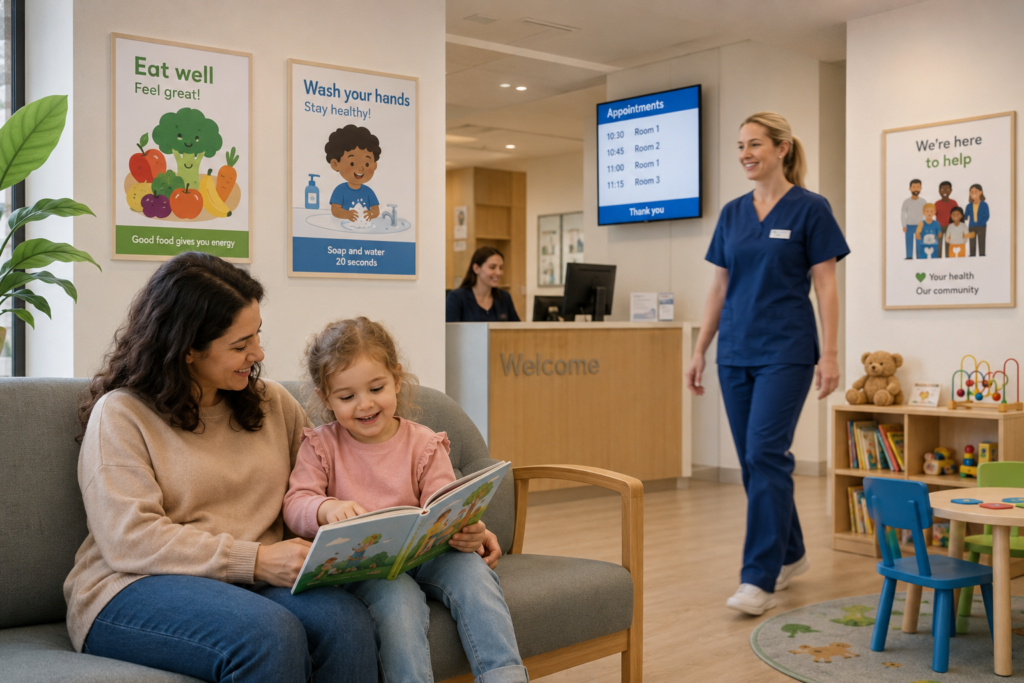
“I can see a doctor’s waiting room.”

“The child is waiting with a grown-up.”

“They are waiting for their appointment.”

👉 Then, depending on the age of your child, add one or more words:

“A friendly doctor.”

“A comfortable waiting room.”

“A helpful nurse.”

💬 3 questions to build language

“What can you see?”

“Who works at the doctor’s surgery?”

“How do doctors and nurses help us?”

If no answer

That’s okay — keep modelling:

“This is a doctor’s surgery.”

“The child is waiting.”

“The doctor helps people feel better.”

⏱️ 2-minute routine

Look → Name → Add one word → Ask one question

Keep it short, warm, and pressure-free.

Weekly Updates, Word of the Week

Week 29 – Word of the Week – proud

Say it in real-life moments (mealtimes, bath, getting dressed, play). Point to what’s happening, then use the word in a short sentence. Repeat it often and ask your child to repeat it too.

Words appearing in Word of the Week have been chosen to support the DfE (Department for Education) emphasis on skills and vocabulary required for children from birth to age 5. These skills and goals are set out in the Early Years Foundation Stage Framework (EYFS), which is designed for early childhood learning.
Weekly Updates, Word of the Week

Week 28 – Word of the Week – angry

Say it in real-life moments (mealtimes, bath, getting dressed, play). Point to what’s happening, then use the word in a short sentence. Repeat it often and ask your child to repeat it too.

Words appearing in Word of the Week have been chosen to support the DfE (Department for Education) emphasis on skills and vocabulary required for children from birth to age 5. These skills and goals are set out in the Early Years Foundation Stage Framework (EYFS), which is designed for early childhood learning.

Picture of the Week, Weekly Updates

Week 28 – Picture of the Week


Grown-Up Guide: Let’s Talk!

Words you may find useful:


What to do

Sit together and look at the picture. Let your child lead — follow what they notice first.

You say it first (Copy + Add)

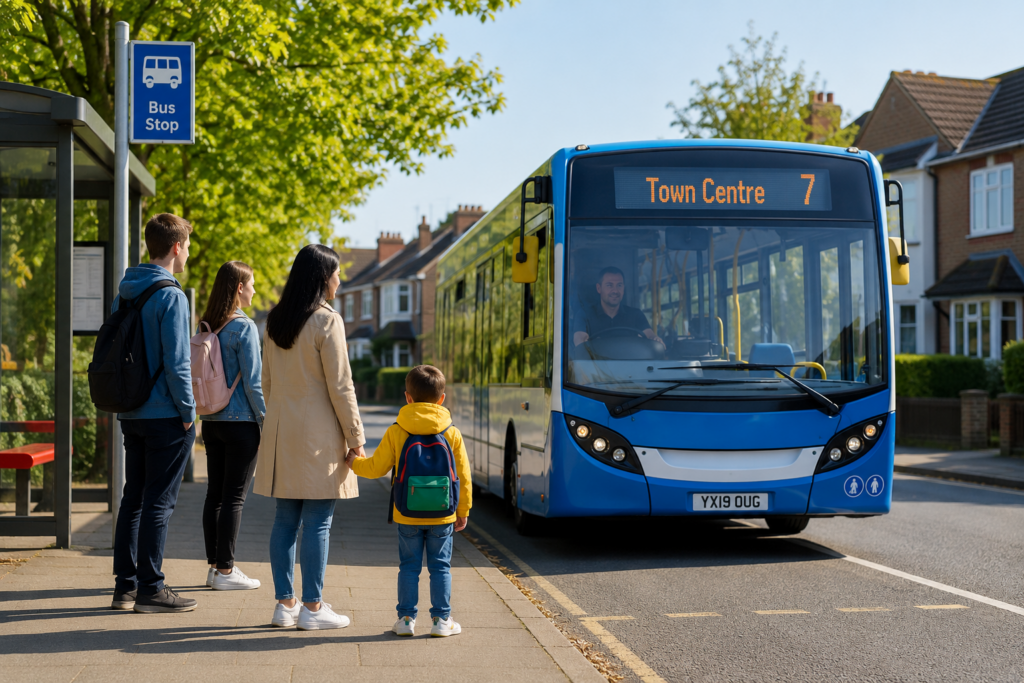
“I can see a bus.”

“The people are waiting at the bus stop.”

“The bus is arriving.”

👉 Then, depending on the age of your child, add one or more words:

“A big yellow bus.”

“A patient queue of people.”

“A friendly bus driver.”

💬 3 questions to build language

“What can you see?”

“Where do you think the bus is going?”

“What do we do while we are waiting for the bus?”

If no answer

That’s okay — keep modelling:

“It is a bus.”

“The people are waiting.”

“The bus has stopped.”

⏱️ 2-minute routine

Look → Name → Add one word → Ask one question

Keep it short, warm, and pressure-free.

Subscribe for FREE Weekly Word + Picture

Close Welcome Bar
Scroll to Top