
TLDR: Before Reception, the three things worth practising at home are going to the toilet independently, getting dressed and undressed, and choosing water over squash or fizzy drinks — all simple, all free. Little and often is the key: five minutes of practice in the morning routine now saves a lot of stress come September.
How to Prepare Your Child for Reception: Personal Care
One of the quiet superpowers of early childhood is learning to do things for yourself. Children who can manage their own basic needs arrive at Reception feeling capable — and that confidence matters from day one.
You may already have laid good groundwork. Hanging up a coat, recognising their name on a peg, following a daily routine — all of that is brilliant preparation. Keep going.
What does the EYFS actually say?
The Early Years Foundation Stage framework names three specific self-care skills that children are expected to reach by the end of Reception year (around age five). That means the year before school is your runway, not a deadline — it’s the ideal time to build these habits at home, without the pressure.
“Never help a child with a task at which he feels he can succeed.”
Maria Montessori
As Maria Montessori put it: “Never help a child with a task at which he feels he can succeed.” It’s harder than it sounds — but it’s one of the most powerful things you can do.
The three skills are:
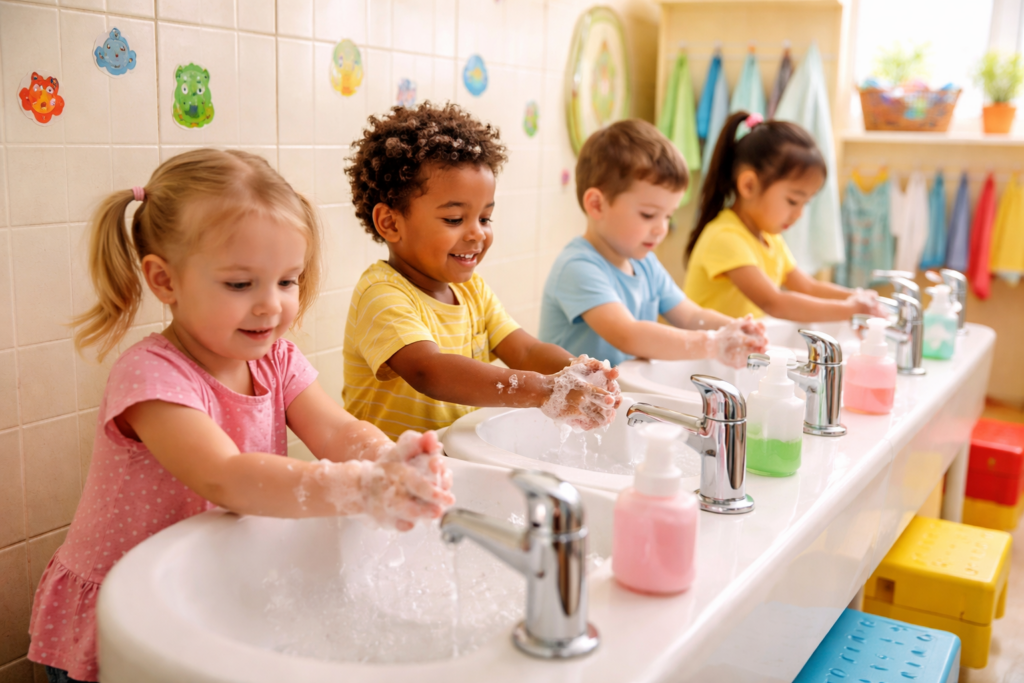
1. Toileting independently Going to the toilet, wiping, flushing, and washing hands — all without prompting. This is the big one. If your child is not yet wiping independently, make it a gentle focus now. Narrate the steps, practice together, and praise effort rather than perfection.
🎬 CBeebies can help here: the Hey Duggee Potty Training Song and The Toilet Song are both fun, short videos that walk children through the steps — including handwashing at the end. Find them at bbc.co.uk/cbeebies.
2. Dressing and undressing In Reception, children change for PE, manage coats at playtime, and sort themselves after toilet trips. Doing up buttons and zips takes practice — so build it into your morning routine. Give them time, even when you’re in a hurry (just not when you’re in a hurry). Resist the urge to step in too quickly.
3. Understanding healthy food choices This is about making healthy options the default at home — and the good news is that they’re often the most affordable ones too. Fruit, vegetables, water, and plain crackers are typically cheaper than confectionary and fizzy drinks. It’s worth knowing that most schools do not allow squash or fizzy drinks in packed lunches, and they aren’t provided at lunchtime either. Starting these habits now means no surprises — and no battles — on day one.